In Pakistan, the demand for reliable backup power and solar energy storage has surged in recent years due to rising electricity costs and frequent power outages. Lithium-ion batteries – especially in the 48V range – have become a linchpin of modern solar and UPS (Uninterruptible Power Supply) systems, offering longer life and better performance than traditional lead-acid batteries. This complete guide provides up-to-date information (as of August 2025) on 48V lithium battery prices in Pakistan, including both locally manufactured and imported models. We’ll also compare key features like capacity, warranty, and ideal applications to help consumers, solar installers, resellers, and EV enthusiasts make informed decisions.
Why Choose a 48V Lithium Battery in 2025?
48V lithium batteries are the standard for medium-sized energy storage systems. A 48V battery pack is typically used with home or commercial solar installations, off-grid setups, large UPS systems, and even some electric vehicles (like e-rickshaws). Here’s why 48V lithium batteries are gaining popularity in Pakistan:
– Higher Efficiency & Depth of Discharge: Lithium batteries can use up to 85–90% of their capacity, whereas lead-acid batteries effectively use about 50%. This means a smaller lithium battery can deliver the same usable energy as a much larger lead-acid battery, optimizing space and cost in the long run.
– Longer Lifespan: Quality lithium iron phosphate (LiFePO₄) batteries last 5–10 years or more, often rated for 4,000–6,000 cycles (which can translate to 10+ years of daily use). Lead-acid batteries usually need replacement after 1–3 years of heavy use. This longevity of lithium translates to lower replacement costs over time.
– Fast Charging & High Performance: Lithium batteries charge much faster (in 2–4 hours) compared to lead-acid (6–10 hours). They also maintain a stable voltage during discharge, providing consistent power output – crucial for sensitive electronics and inverters. High discharge rates make them suitable for power-hungry appliances and motor startups (or acceleration in EVs).
– Lightweight & Compact: Lithium packs are significantly lighter than equivalent lead-acid banks, reducing floor load and making wall-mounted designs possible. The compact, wall-mountable lithium “powerwall” style batteries save space and are easier to install – a major plus for home installations where space is at a premium.
– Low Maintenance: Forget the regular water top-ups and corrosion checks – lithium batteries are maintenance-free. Install them and let the built-in battery management system (BMS) handle the rest. There’s no memory effect and self-discharge is very low, meaning they hold charge well if left unused.
All these advantages mean that while 48V lithium batteries have a higher upfront cost, they provide better value and peace of mind over the long term. Now, with more local companies entering the lithium battery market in Pakistan, prices are becoming more competitive and options more diverse for consumers.
Local vs. Imported 48V Lithium Batteries
In 2025, Pakistan’s market offers a mix of locally assembled batteries and imported brands. Local manufacturers (or assemblers) often source lithium cells from abroad but design the battery packs and support locally. Imported batteries are fully made by international brands and brought in via distributors. Here’s how they compare:
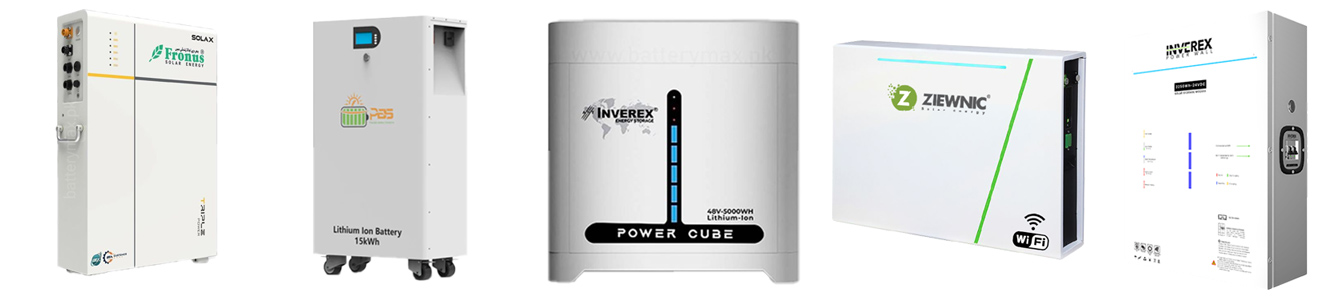
Local Models: Brands like Inverex, Exide, Osaka, Phoenix, Tesla Industries (Pak), Badar Energy, Ziewnic, Knox, etc., are providing lithium battery solutions tailored for Pakistan. These usually come with local warranty and service centers, and sometimes a lower price due to reduced import duties or assembly of cells locally.
For example, Exide (a renowned Pakistani battery maker) now sells a 48V 100Ah “Dragon” lithium pack for around Rs.245,000, and newcomers like Badar Energy offer a 48V 100Ah (≈5 kWh) lithium battery at about Rs.195,000 – undercutting many imports. Local brands often emphasize compatibility with popular inverters and may offer features like wall-mount designs and LCD displays. Warranty on local batteries varies by company – some offer generous terms (Badar Energy advertises a 5-year replacement warranty, and Ziewnic offers 6 years on its Li-BOX), whereas traditional battery makers like Exide/Phoenix might start with 1 or 2-year warranties as they enter the lithium market.
Imported Models: These include globally recognized names like Tesla, BYD, Pylontech, Narada, Dyness, Growatt, AlphaESS, Soluna, Voltronic (and more). They often command higher prices – partly due to brand reputation and higher guaranteed cycle life – but they also usually come with longer warranties (often 5 to 10 years). For instance, the Tesla Powerwall 2 (13.5 kWh, 48V, NMC chemistry) is available in Pakistan as a premium imported option at around ₨ 1,150,000–1,300,000 PKR, backed by Tesla’s 10-year warranty.
Chinese manufacturers like Pylontech and BYD are also popular for solar installations; a Pylontech 5.12 kWh (48V 100Ah) battery is roughly ₨265,000 and comes with up to 10-year warranty when registered, while a BYD Battery-Box 5.0 (5 kWh, 48V) is about ₨280,000 (BYD offers a 10-year warranty as well). Imported batteries often boast advanced Battery Management Systems and certifications (UN38.3, IEC62619, etc.), ensuring safety and performance. However, buyers should ensure after-sales support – reputable distributors (e.g., official Narada or Pylontech partners) will honor warranties locally, but gray imports might not.
In summary, local batteries tend to be cheaper and easier to service, whereas imports offer pedigree and sometimes higher tech specs (and usually a longer proven track record). The choice often boils down to budget, required performance, and trust in the brand’s support network. Many solar installers in Pakistan now actually mix components – e.g., using a locally made battery with an imported inverter, or vice versa, to balance cost and reliability.
48V Lithium Battery Price Table (Pakistan 2025)
Below we present a structured comparison of popular 48V lithium battery models available in Pakistan as of August 2025. The table is split into Local Models (Pakistan-manufactured or local brand) and Imported Models. For each battery, we list the brand/model, type/chemistry, nominal voltage & capacity, approximate price in PKR, the offered warranty, country of origin, and ideal application.
Local 48V Lithium Battery Models (Made/Branded in Pakistan)
These batteries are either manufactured in Pakistan or sold under local brands. They are designed for the Pakistani market, with features to handle local conditions and typically local warranty support.
| Brand & Model | Type | Voltage & Capacity | Price (PKR) | Warranty | Origin | Ideal Application |
| Inverex Power Wall 5.3 | LiFePO₄ | 48V, 104 Ah (5.3 kWh) | 370,000 – 420,000 | 5 Years | Pakistan (local brand) | Solar home storage (wall-mount), long backup (5000+ cycles) |
| Inverex Power Cube 5.0 | LiFePO₄ | 48V, 100 Ah (5.0 kWh) | 530,000 – 580,000 | 5 Years | Pakistan (local brand) | Modular battery bank for larger solar setups (stackable BMS) |
| Exide “Dragon” 48V 100Ah | LiFePO₄ | 48V, 100 Ah (~4.8 kWh) | Rs. 245,000 | ~1–2 Years (Manufacturer) | Pakistan (assembled) | Home solar/UPS retrofit (drop-in LiFePO4 replacement for lead-acid) |
| Exide “Atlantic” 48V 105Ah | LiFePO₄ | 51.2V, 105 Ah (~5.4 kWh) | Rs. 265,000 | ~1–2 Years (Manufacturer) | Pakistan (assembled) | Higher capacity home/commercial UPS, longer backup runtime |
| Badar Energy 48V 100Ah | LiFePO₄ | 48V, 100 Ah (5.12 kWh) | Rs. 195,000 | 5 Years Replacement | Pakistan (local mfg.) | Budget-friendly solar storage, daily cycling (6000+ cycles) |
| Ziewnic Li-BOX 100Ah | LiFePO₄ | 51.2V, 100 Ah (5.12 kWh) | Rs. 215,000 | 6 Years | Pakistan (local brand) | Wall-mount power bank for solar/UPS (LCD display, plug-and-play) |
| Knox H-U51100 Powerwall | LiFePO₄ | 51.2V, 102 Ah (5.2 kWh) | Rs. 320,000 | ~5 Years (8000 cycles) | Pakistan (local brand) | High-end home/commercial storage (rack or wall mount, inverter-compatible) |
| Phoenix “Lithium HP” Series | Li-ion (LFP) | 48V class (various) | Varies (e.g., 24V 100Ah at 133k) | 1–2 Years (Expected) | Pakistan (assembled) | Emerging lineup for solar UPS (Phoenix’s initial LiFePO4 offerings) |
| Tesla Industries 48V 100Ah (local) | Li-ion (NMC) | 48V, 100 Ah (~4.8 kWh) | ~Rs. 210,000 (market) | 1 Year (local) | Pakistan (local brand) | UPS and solar backup (lighter-weight NMC chemistry; marketed by Tesla PK) |
| Others (CoreTech, Crown etc.) | LiFePO₄ | 48V, 100 Ah (approx 5 kWh) | ~Rs. 200k–260k (varies) | 1–3 Years (varies) | Pakistan (assembled/brand) | Solar inverter batteries and telecom backups (various local rebrands using LFP cells) |
Notes: Local prices are market averages; actual retail may vary by city and dealer. “Tesla Industries” refers to a local Pakistani brand (not Tesla Inc. US) that markets lithium batteries for UPS systems – their 48V model (often using NMC cells) was around Rs.210k in mid-2025. Phoenix, a major lead-acid battery maker, has introduced lithium models in 12V/24V; a 48V model is anticipated but was “coming soon” in August 2025.
Most local LiFePO₄ batteries support 2–4 in parallel for higher capacity and are optimized for solar inverter integration (e.g., Inverex, Ziewnic and Knox units list broad inverter compatibility). Warranty terms are improving as competition grows – e.g., Ziewnic’s 6-year warranty and Badar’s 5-year show strong confidence, on par with some imports.
Imported 48V Lithium Battery Models (International Brands)
These battery models are produced by well-known international companies and imported into Pakistan through official distributors or solar solution providers. They often carry premium pricing, but also higher capacity options and longer warranty support.
| Brand & Model | Type | Voltage & Capacity | Price (PKR) | Warranty | Origin | Ideal Application |
| Tesla Powerwall 2 | Lithium NMC | 48V, 13.5 kWh (270 Ah) | 1,150,000 – 1,300,000 | 10 Years (70% capacity) | USA (Imported) | Whole-home battery storage, luxury solar backup (smart IoT features) |
| BYD Battery-Box LV 5.0 | LiFePO₄ (LFP) | 51.2V, 100 Ah (5.12 kWh) | ~Rs. 280,000 | 10 Years | China (BYD) | Modular solar storage (stackable units for homes & businesses) |
| Pylontech UP/US5000 | LiFePO₄ (LFP) | 48V, 100 Ah (4.8–5.12 kWh) | ~Rs. 265,000– 320,000 | 10 Years (typical) | China (Pylontech) | Solar ESS battery module (rack-mounted, 90% DoD, widely inverter-compatible) |
| Narada 48NPFC100 | LiFePO₄ (LFP) | 48V, 100 Ah (4.8 kWh) | 330,000 – 360,000 (~200k via some sellers | 5 Years | China (Narada) | Telecom and industrial-grade backup (rugged floor-standing unit, 4000+ cycles) |
| Narada 48V 150Ah (SES) | LiFePO₄ (LFP) | 48V, 150 Ah (7.5 kWh) | ~Rs. 500,000+ (estimate) | 5 Years | China (Narada) | Large off-grid systems, commercial UPS (floor type battery bank) |
| Dyness 5.12 kWh (BX/DL) | LiFePO₄ (LFP) | 51.2V, 100 Ah (5.12 kWh) | Rs. 233,000 – 245,000 | 5–7 Years (Local Rep) | China (Dyness) | Home solar battery (wall/rack mount, ~8000 cycles, often 5 kW inverters) |
| Growatt GBLI6532 | LiFePO₄ (LFP) | 51.2V, ~128 Ah (6.5 kWh) | 510,000 – 560,000 | 5 Years (Manufacturer) | China (Growatt) | Pair with Growatt hybrid inverters (integrated monitoring, high capacity) |
| AlphaESS SMILE5 | LiFePO₄ (LFP) | 48V, 100 Ah (5.0 kWh) | 480,000 – 520,000 | 10 Years (incl. inverter) | China (AlphaESS) | All-in-one solar battery system (optionally comes with built-in inverter) |
| Soluna 5.1 kWh | LiFePO₄ (LFP) | 48V, ~100 Ah (5.1 kWh) | 390,000 – 440,000 | 5+ Years | Australia/China | Safe, high-end battery unit (smart BMS, often used in high-spec solar setups) |
| Voltronic Power 5kWh | LiFePO₄ (LFP) | 48V, ~100 Ah (5.0 kWh) | 390,000 – 430,000 | 5 Years (via local distributor) | Taiwan (Voltronic) | Designed for Voltronic/Axpert inverter systems (plug & play compatibility) |
| CATL 5 kWh Module | Lithium NMC | ~48V, ~100 Ah (5.0 kWh) | 450,000 – 500,000 | 5–10 Years (OEM cells) | China (CATL) | EV-grade battery module for custom solar and EV projects (requires BMS integration) |
| Ritar 5.12 kWh | LiFePO₄ (LFP) | 51.2V, 100 Ah (5.12 kWh) | ~Rs. 250,000 | 3–5 Years (Vendor) | China (Ritar) | Solar storage battery (Ritar is known for VRLA, now offering LFP for solar use) |
| Leoch 4.8 kWh | LiFePO₄ (LFP) | 48V, 100 Ah (4.8 kWh) | Coming Soon | 5 Years (Expected) | China (Leoch) | Upcoming option for solar/UPS (Leoch, another VRLA giant, entering Li market) |
Notes: Imported prices can fluctuate with exchange rates and import duties. Warranties listed are typical as per manufacturer; local distributor warranties might differ.
For example, Pylontech’s official warranty is 10 years (or a cycle count) when installed by certified partners. Tesla Powerwall’s warranty guarantees 70% capacity retention after 10 years. Narada batteries are widely used in telecom – their pricing shows variation: some distributors list ~₨330k for a new 4.8kWh unit, while certain retailers offered the same around ₨200k (possibly older stock or aggressive pricing).
CATL modules are essentially EV battery blocks repurposed for solar; they require an external BMS/inverter integration – great for enthusiasts or large installations (like battery banks for off-grid or even electric boats), but not a plug-and-play consumer product.
Chemistry differences
Most models above use LiFePO₄ (Lithium Iron Phosphate), known for safety (thermal stability) and long cycle life – ideal for daily solar cycling and backup. Some high-energy units (Tesla Powerwall, CATL modules) use NMC (Lithium Nickel Manganese Cobalt) chemistry, which has higher energy density (more kWh in smaller size) but slightly fewer cycles. For stationary use, LiFePO₄ has become dominant due to its durability (many exceed 5000 cycles, as noted for several brands quoting ~6000–8000 cycles).
Price Trends and Value Comparison (2025)
From the data above, we can observe a few key trends in Pakistan’s 48V lithium battery market in 2025:
– Prices are gradually coming down: A 5 kWh lithium battery bank which used to cost well above Rs.400,000 a couple of years ago can now be found around the mid-200k range for basic models. The entry-level 4.8–5.3 kWh systems start around PKR 200,000–300,000 in 2025. Local assembly by companies like Badar Energy and aggressive pricing by Chinese brands like Dyness have pushed the price per kWh lower. For instance, Badar’s 4.8 kWh at Rs.195k equates to ~Rs.40,600 per kWh – one of the lowest in the market. In contrast, premium imported solutions (AlphaESS, Tesla) still cost above Rs.90,000 per kWh, reflecting the extra features and brand value.
– Local vs Imported price gap: Mid-range imported batteries (Pylontech, Narada, BYD) hover around Rs.50k–60k per kWh, while local mid-range (Exide, Inverex) are in a similar ballpark (Exide’s 5.4 kWh at 265k is ~Rs.49k/kWh, Inverex’s 5.3 kWh at ~400k is higher, ~Rs.75k/kWh). Locally branded options like Fronus Solax (a locally marketed 5.12 kWh unit) were as low as ₨197,000 (~Rs.38.5k/kWh), indicating some of the cheapest per kWh storage available, albeit with possibly shorter warranty or less brand recognition. This means savvy customers can save significantly with local brands if they do due diligence on quality.
– Warranty and lifespan: Imported batteries generally advertise longer warranties (5–10 years). However, local players are catching up – offering 5+ year warranties on premium lines to build consumer trust. For example, Dyness (imported from China) is sold with up to 7 years warranty by some Lahore dealers, while Ziewnic (local) offers 6 years, and Inverex officially gives 5 years on its PowerWall. These warranties reflect confidence in the life cycle claims (most LiFePO₄ are rated ~6000 cycles which is ~daily use for 16 years, though warranties cover a portion of that). Always check the fine print – some warranties may be pro-rated or require registration/installation by certified installers.
– Higher capacities available: While 100Ah (≈5 kWh) is the common size, there are larger batteries like 150Ah (7.5 kWh) and even 200Ah (10 kWh+) becoming available (often by paralleling modules). Narada’s 7.5 kWh floor unit and Knox’s Rackwall series (up to 15 kWh modules) target those needing big storage. For very large needs, one can stack multiple 5 kWh modules – e.g., Pylontech allows stacking 8–15 units, Knox up to 15 units parallel – to reach 40+ kWh if needed for commercial setups.
How to Choose the Best 48V Lithium Battery for Your Needs
Choosing a lithium battery involves balancing budget, capacity needs, compatibility, and application. Here are key considerations for different types of buyers in Pakistan:
For Homeowners (UPS & Solar Backup Users)
If you’re a homeowner looking to add a lithium battery to your solar inverter or UPS system, focus on compatibility and safety. Ensure the battery’s nominal voltage (typically 48V, which is ~51.2V for LiFePO₄ when full) is supported by your inverter’s lithium battery mode. Many modern hybrid inverters have settings for LiFePO₄ batteries. Check if the battery supports communication (some batteries can communicate via CAN/RS485 with the inverter for optimal charging; some brands list compatibility with major inverter brands).
For an average Pakistani home with 3–5 kW of solar panels, a 5 kWh (100Ah) 48V battery can typically provide around 4–5 hours of backup for essential loads (fans, lights, TV, laptop, fridge) during evening or an outage. If you need more hours or to run air conditioners, consider two batteries in parallel (for ~10 kWh).
Budget-wise: If you want the best value, local options like Badar Energy or Fronus Solax offer the lowest cost per kWh. They use LiFePO₄ cells and are quite suitable for typical home solar use. Just verify the warranty and after-sales support availability in your city. On the other hand, if you prioritize a set-and-forget solution with a long warranty, investing in a Narada or Pylontech might be wise – their price gets you a battery known to last 10+ years, with minimal capacity fade.
Safety Tip: Insist on batteries with a good BMS (Battery Management System). All the reputable ones listed have protections for over-charge, over-discharge, over-current, and temperature. Avoid no-name cheap imports without clear specifications; a lithium battery is a long-term investment – cutting corners could be hazardous.
For Solar Installers and Resellers
If you’re a solar installer or reseller, the landscape in 2025 offers both challenges and opportunities. Customers are increasingly asking for lithium options. Here’s what to keep in mind:
– Quality and Warranty are King: As an installer, you don’t want to be swapping out failed batteries every year. It’s often safer to choose brands with established reliability. Pylontech, BYD, Narada, Dyness have international track records and usually come with software tools for diagnostics. However, Pakistani-made batteries are improving quickly – some, like Inverex’s own batteries, are actually manufactured to their specs by reputable factories and then supported locally. Working with authorized distributors (who can provide warranty replacements quickly) is crucial.
– Integration & Compatibility: Ensure the battery can integrate well with the inverters you install. For example, Growatt’s battery is best paired with Growatt inverters, Voltronic’s battery works seamlessly with Axpert/PWM inverters, etc. Some high-end systems use closed communication – e.g., Tesla Powerwall really wants a Tesla or compatible gateway to work optimally. For most off-grid/hybrid systems in Pakistan, stick to open systems. Many installers favor Pylontech for this reason – it’s brand-agnostic and widely supported.
– Cost vs. Performance: Stock a range for different budget customers. Have an entry-level 100Ah option (maybe local) for those tight on budget, and a premium option (imported) for those who want the best. Also consider offering stackable systems – e.g., two 50Ah modules can sometimes be easier to handle/install than one 100Ah monolith, and allow upselling more capacity later. Pylontech’s US2000C (2.4 kWh) could be a great modular upsell: a client can start with one or two and add more later as needed.
– Emerging tech: Stay updated on new entrants. As a reseller, diversifying your portfolio with a mix of local and imported brands can cater to a broader market.
For EV Enthusiasts (E-rickshaws, Solar EV Conversions)
Electric vehicles (EVs) in Pakistan, such as e-rickshaws, golf carts, and bikes, often run on 48V systems for simplicity. However, using a solar storage battery in an EV requires examining a few specifics:
– Continuous Discharge Rate: EVs draw high current. Many solar-type 48V batteries (LiFePO₄) are designed for steady moderate discharge (e.g., 0.5C to 1C continuous, meaning a 100Ah can continuously provide 100A). For an e-rickshaw motor, 100A might be okay, but check the peak draw (starting or accelerating might need more). Batteries like certain Li-BOX specs allow 100A continuous and high impulse for short bursts – which is often sufficient for small EVs.
– Weight and Form Factor: LiFePO₄ cells are heavier (energy density ~130 Wh/kg) than NMC (~180 Wh/kg). For a solar installation, weight isn’t a big issue, but in an EV, every kg matters for range. Thus, an imported EV battery module (car-grade) might make sense despite cost — it packs a lot of energy in a compact form and can output high currents.
– BMS and Safety in EV: EV applications require robust BMS with cell balancing and preferably temperature monitoring. If you adapt a solar battery for an EV, ensure the BMS’s cutoff limits match your motor controller’s needs. Over-discharge protection is crucial to avoid stranding an EV user with a flat battery that’s been drained too much.
– Charging: Many EV setups use regenerative braking or specialized chargers. Ensure the battery you choose can handle the charging amps. Most 100Ah LiFePO₄ can charge at 50A comfortably (0.5C) and some up to 100A (1C). That’s usually fine for overnight charging; regenerative braking currents are short bursts and should be okay if within limits.
In summary, for EV use: you might lean towards slightly different products than the average solar user – possibly NMC-based packs for their light weight, or ensure the LiFePO₄ pack you pick can deliver the current. Always secure the battery well (vibrations in a rickshaw need a sturdy enclosure) and provide cooling if the currents are high.
For Commercial & Industrial Users
If you’re planning backup for an office, telecom tower, or factory – the scale might be bigger (20 kWh, 50 kWh or more). At that scale, economy of scale kicks in with lithium: managing a huge bank of lead-acid batteries is space-consuming and inefficient. Lithium’s footprint is smaller. Consider these:
– High-Capacity Systems: Look at solutions like Narada 48V 200Ah (10 kWh) units or building a rack of multiple 5 kWh modules. Some companies offer cabinet systems that slot in multiple batteries neatly. They come with built-in circuit breakers and management for ease. While initial cost is high, remember that these can often replace a diesel generator for outage bridging – saving fuel costs.
– Cycling and Depth: If you plan to cycle daily (e.g., solar self-consumption), go LiFePO₄ without question – the long-term cost per cycle beats any lead battery easily. If it’s just occasional backup, you might not need the top-tier battery – but given lithium’s advantages, many businesses still opt for it for reliability (especially telecom sector already largely moved to lithium).
– Redundancy: For mission-critical applications, consider multiple smaller batteries rather than one huge battery. That way, if one fails, you have partial backup rather than total blackout. Lithium batteries can be mixed and matched in parallel (ideally same model/brand). For example, instead of one 15 kWh unit, you could use three 5 kWh units in parallel. This also eases future expansion.
– Brands to trust: Telecom and industrial often use Narada, Sacred Sun, Vision – these are Chinese industrial battery specialists. They may not be as flashy as Tesla or as common in home solar, but they are built for robustness (with features like flame-retardant casing, inbuilt heating for cold sites, etc.). Purchasing through local authorized partners can ensure you get genuine units with support.
Solar Lithium Battery FAQ (Pakistan 2025)
Q1. What is the price of a 48V lithium battery in Pakistan (2025)?
A: It varies by brand and capacity. As of August 2025, a standard 48V 100Ah (~5 kWh) LiFePO₄ battery costs around ₨200,000 to ₨270,000 for most models. Cheaper local units can be ~₨195k, while premium imported ones (Pylontech, Narada, BYD) are in the ₨250k–₨330k range. Ultra-premium options like Tesla Powerwall (13.5 kWh) cost over ₨1 million. It’s best to refer to the latest price lists or local dealers, as prices can fluctuate with exchange rates and demand.
Q2. Which 48V lithium battery is best for solar systems?
A: “Best” depends on your priorities: For longevity and performance, brands like Pylontech, BYD, and Narada have proven track records and long warranties (5–10 years). For value, local batteries like Badar Energy or Inverex offer similar capacity at a lower price, suitable for most home solar setups.
If you need a fully integrated solution with monitoring apps and high power output, consider Tesla Powerwall or AlphaESS which come with smart features (but at a steep cost). Ensure whichever battery you choose is LiFePO₄ chemistry (for solar use this is generally best due to safety and cycle life) and compatible with your inverter’s settings. Checking customer reviews and installer recommendations for your specific inverter model can also guide the choice – compatibility can simplify installation greatly.
Q3. Can I use a 48V lithium battery with my existing UPS/inverter?
A: In many cases, yes – but there are a few conditions. The inverter/UPS must be able to charge a 48V lithium battery properly. Many modern hybrids and UPS have a “lithium” or “LiFePO4” mode. If not, you might need an external lithium battery charger or a custom setting for constant voltage charging (typically around 54.4V to 56.8V for a 51.2V nominal LiFePO₄ pack). Additionally, the battery’s BMS should ideally be able to disconnect to prevent over-discharge – so using a lithium battery with an older UPS that tries to drain to very low voltages might trigger BMS cutoff.
It’s recommended to consult with the battery supplier or a solar technician. When retrofitting, also consider the charger current: lithium can accept faster charging, but your inverter’s charger may be limited (which is fine, it will just take longer). Bottom line: Yes, you can replace a bank of 4x12V lead-acid batteries with a 48V lithium pack in many UPS systems and enjoy longer backup and life, just double-check settings and compatibility.
Q4. How long will a 5 kWh (48V 100Ah) lithium battery last?
A: In terms of backup power: 5 kWh can run, for example, a load of 500 watts for about 10 hours (500 W × 10 h = 5 kWh) if fully discharged. In practice, you wouldn’t use 100% – you might use 80% depth for longevity – so that would be 8 hours at 500 W, or 4 hours at 1 kW load, etc. In terms of lifespan: Most 48V 100Ah LiFePO₄ batteries are rated for ~5,000–6,000 cycles (at 80% depth of discharge). If cycled once daily, that’s roughly 13–16 years of operation to reach end of life (which is typically defined as 60–80% of original capacity remaining).
Many manufacturers give a 5 to 10-year warranty, indicating confidence that the battery will last at least that long. Real-world life will depend on usage: High temperatures and very high charge/discharge rates can age the battery faster. But even after, say, 10 years, the battery won’t suddenly die – it might have, for instance, 70% of its capacity left and still be usable for less demanding backup.
Q5. Are 48V lithium batteries safe? What about the risk of fire?
A: Lithium battery safety has improved greatly, especially with LiFePO₄ chemistry. LiFePO₄ cells are inherently more stable and far less prone to thermal runaway compared to older lithium-ion types. The batteries listed come with a BMS that monitors temperature, voltage, and current, and will disconnect if something is out of range (preventing most misuse scenarios from causing issues).
That said, they are powerful energy storage devices – you should follow installation guidelines: use proper cable sizes, avoid short-circuits, keep in a ventilated area (they don’t emit gas like lead-acid, but electronics can heat up if improperly ventilated), and avoid physical damage to the battery. Almost all reputable 48V units have passed certifications (look for IEC 62619, CE, UN38.3 on spec sheets).
Cases of lithium battery fires in home usage are exceedingly rare when using quality products. By choosing a known brand and having it installed correctly, the safety is very high – arguably safer than lead-acid which can leak acid or produce explosive hydrogen gas if overcharged. Always use the correct charger settings and you’ll have a safe experience.
Q6. Can I connect multiple 48V lithium batteries to increase capacity?
A: Yes, most 48V lithium battery systems are designed to be paralleled for higher capacity. For example, you can connect two 5 kWh batteries to get 10 kWh. This is a common approach for expanding storage. The batteries will share the load and charge current. It’s important that they are of the same model and ideally same age/state of health.
Many brands explicitly state the max number of units that can be paralleled – e.g., some allow up to 8 or more modules in parallel, others up to 15, etc. When installing in parallel, you typically connect each battery’s positive and negative to common busbars (or directly to the inverter’s battery terminals if supported).
The BMS of each operates individually; some systems have a communication cable to sync them, but many simply work in parallel naturally. Do not connect them in series (48V + 48V to make 96V) unless the manufacturer explicitly supports series configuration – most don’t for 48V units. Always follow the manufacturer’s documentation for multi-unit installations. If done right, paralleling batteries is an effective way to expand storage and is routinely done in off-grid power setups.